
Day 2: Breakfast Shots & the Abandoned Settlement
Eggs, chili salt, and lao-lao at 7am. Twenty kilometres into a valley where only the oxen remain.
Eggs, chili salt, and lao-lao at 7am. Twenty kilometres into a valley where only the oxen remain.
Breakfast with the Village
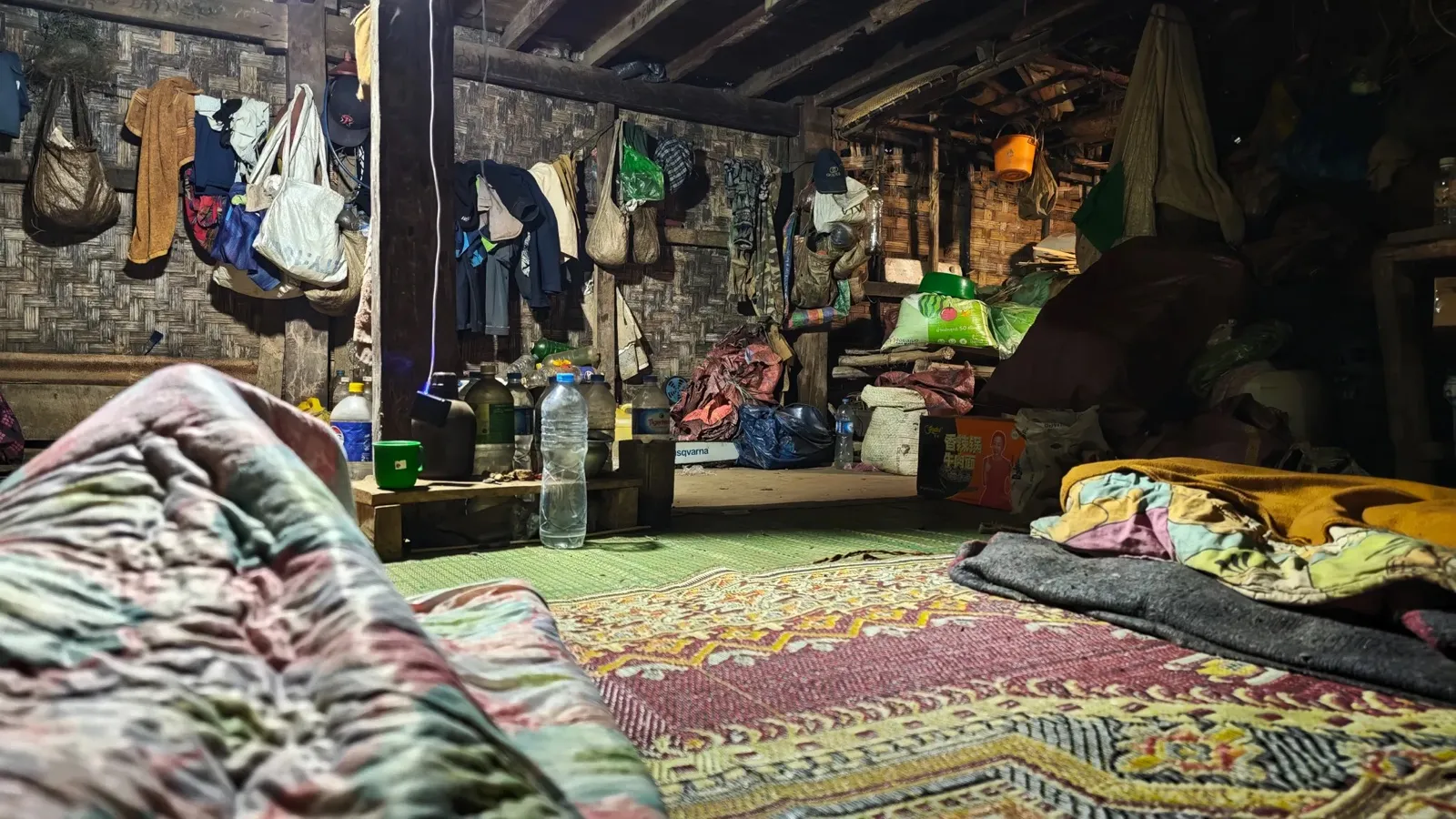
The villagers made us breakfast right next to where we’d slept — cooked over an open fire on the floor of the stilt house. Eggs, vegetables, chili salt. And then, at 7am, shots of lao-lao and bottles of Beer Laos. Lao-lao is rice whisky — distilled in the villages, stored in plastic bottles, and offered to guests the way the British offer tea. Refusing is possible but discouraged.
The host’s cat sat on his lap while he poured. Chickens patrolled below. It was the most civilised breakfast we’d had in days, and also the drunkest.
Twenty Kilometres
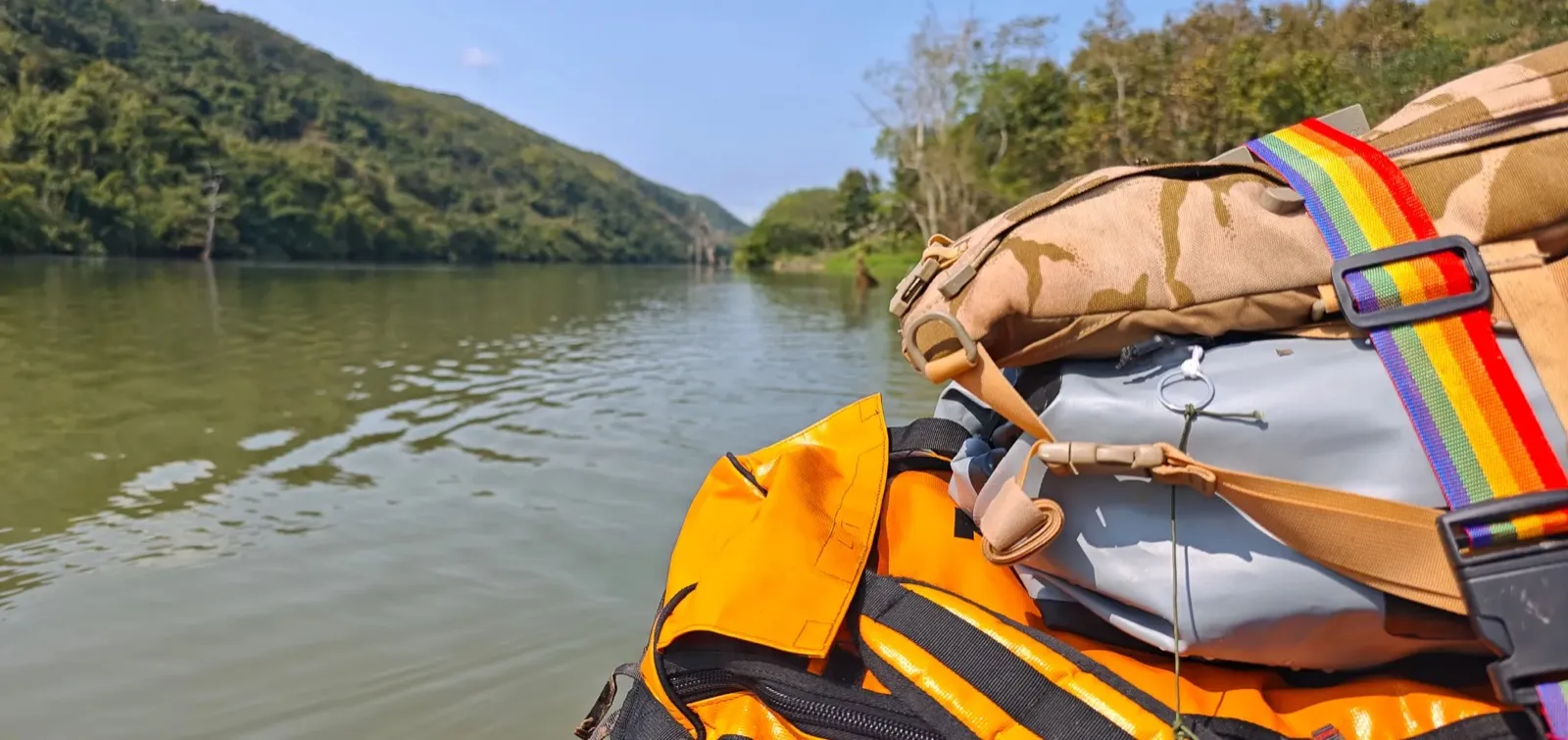
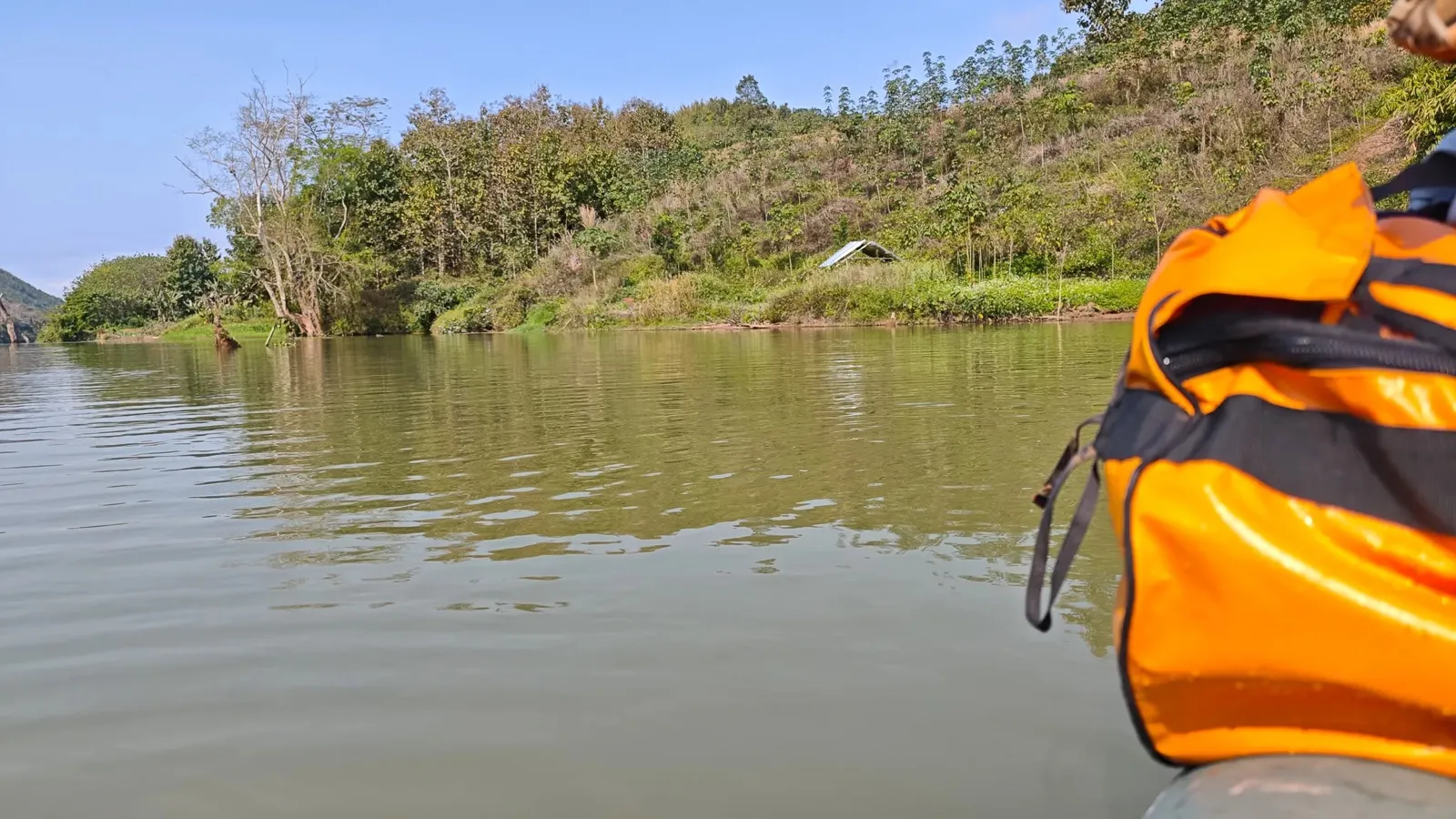
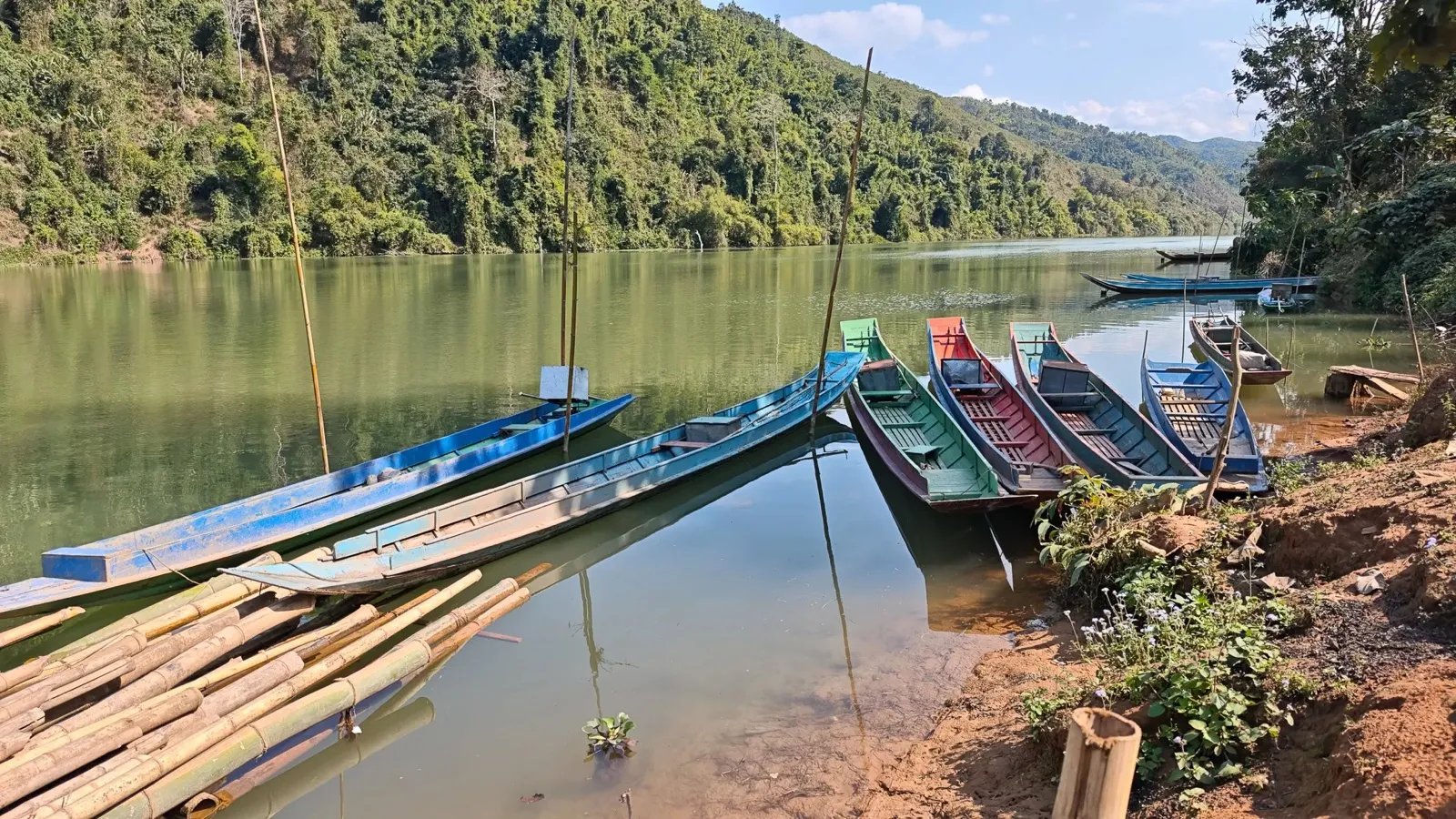
We paddled 20 kilometres — the longest day yet. The Nam Ou widened and narrowed, the hills pressing in then falling back. We passed villages on the riverbanks: wooden houses with red tin roofs, longboats moored on the mud, children waving from bamboo rafts. At each one, we could have stopped. The river gives you options. We chose to keep going.
The River Communities
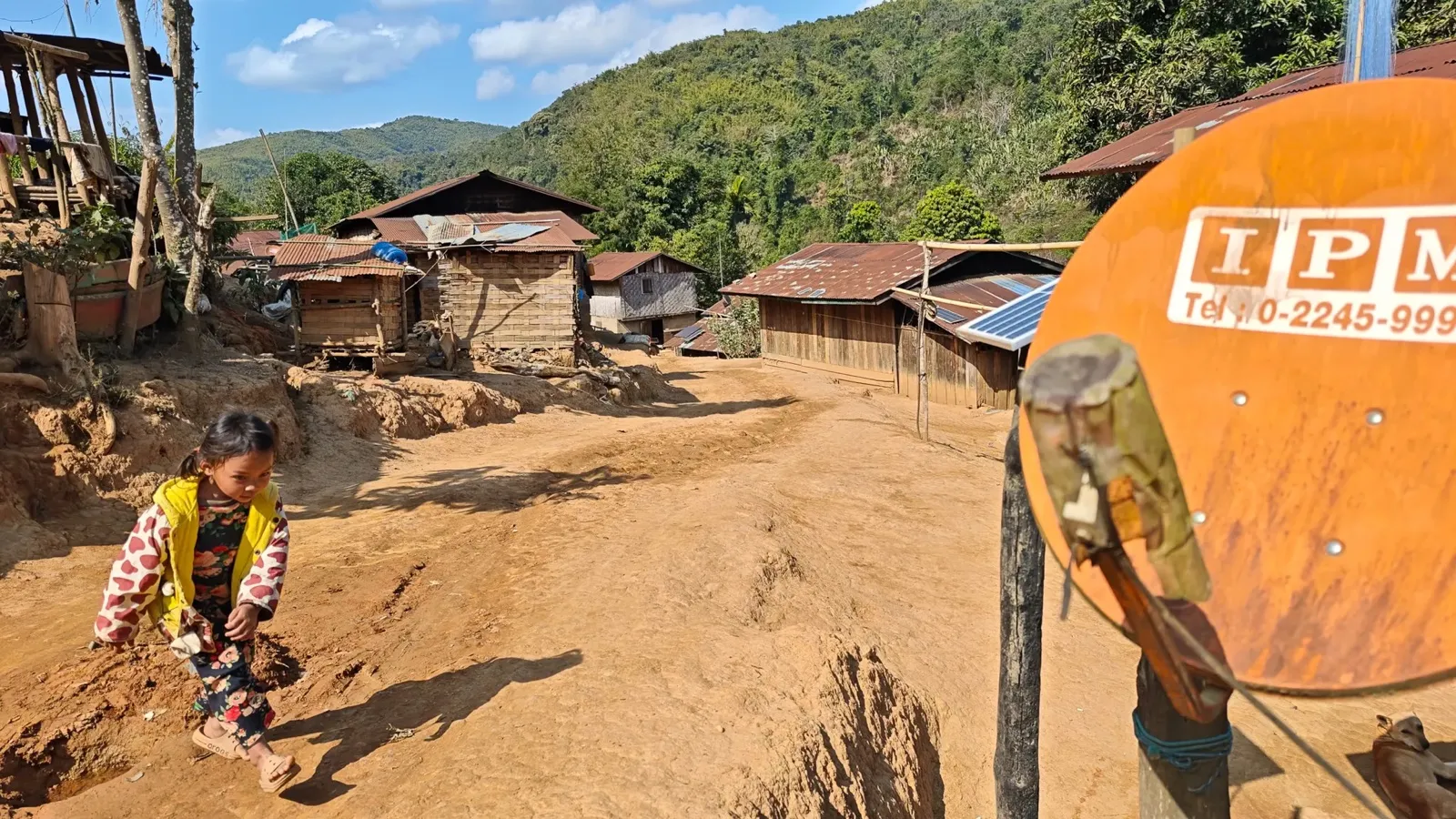
At the 14km mark we pulled into a village — bamboo huts, a child in a yellow jacket staring at us, a satellite dish on one roof (the only concession to the 21st century). We could have stayed. The villagers would have offered. But something about the afternoon light and the current made us push on. That decision led us somewhere we didn’t expect.
Drowned Trees
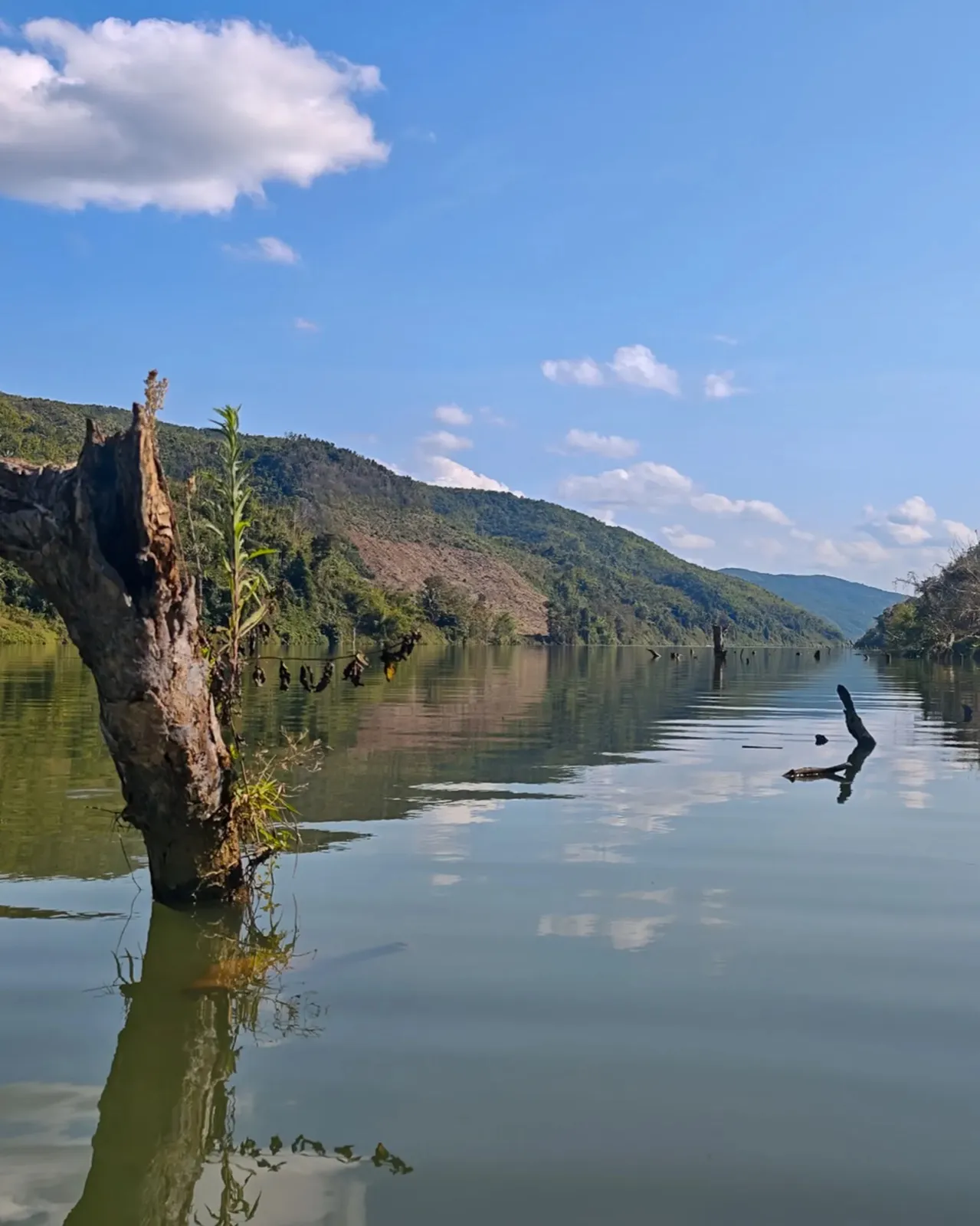
Before we reached the settlement, the river changed. Dead trees stood upright in still water — a forest drowned by a reservoir. The Nam Ou cascade is a series of seven hydroelectric dams built by PowerChina under a $2.7 billion deal signed in 2011. They’ve displaced 12,000 people from hundreds of villages. The reservoirs flooded farmland, forests, and the riverbanks where communities had fished for generations.
Nobody talks about the dams on the tourist trail. But when you’re paddling through a flooded valley of dead trees, you see the cost. The submerged stumps reflect in the flat water like a photograph of something that used to be alive.
Abandoned
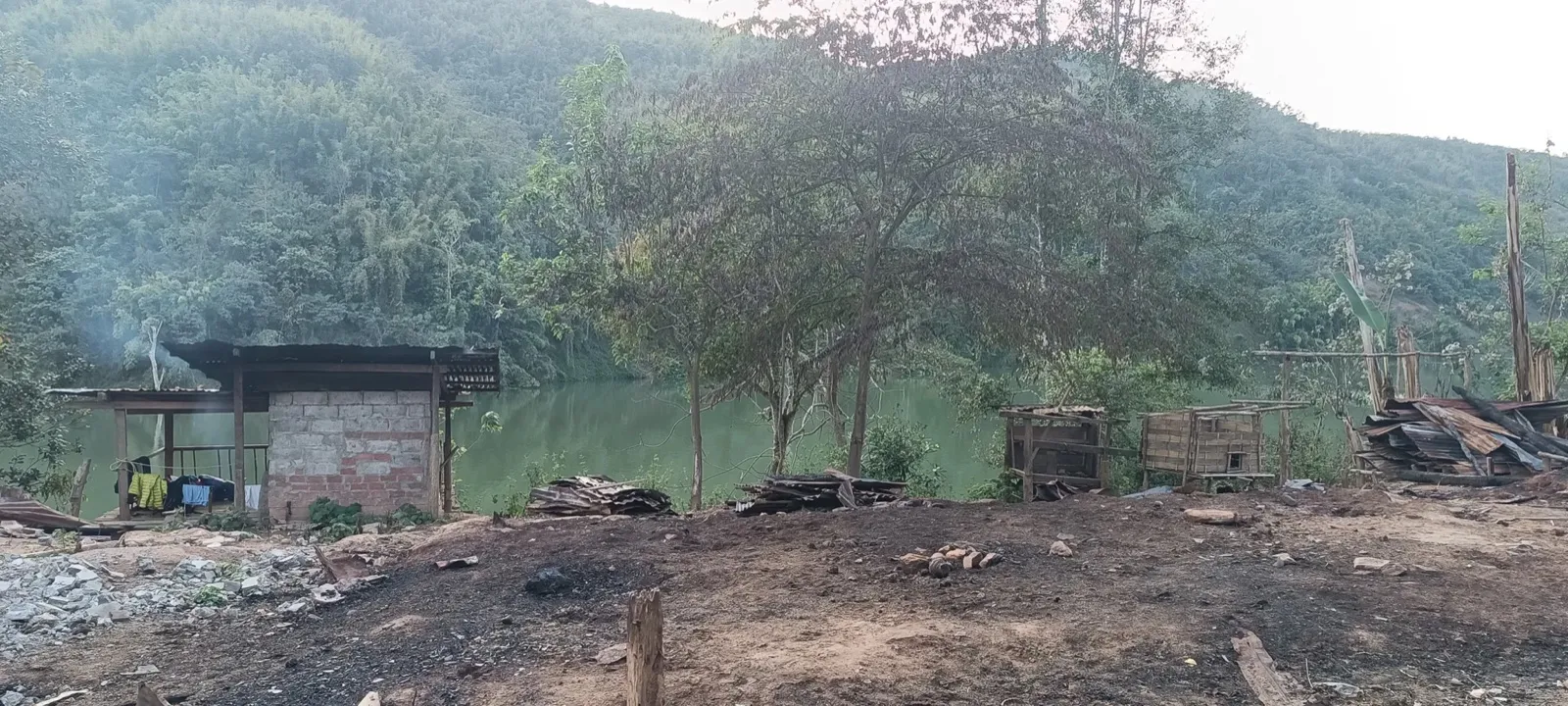
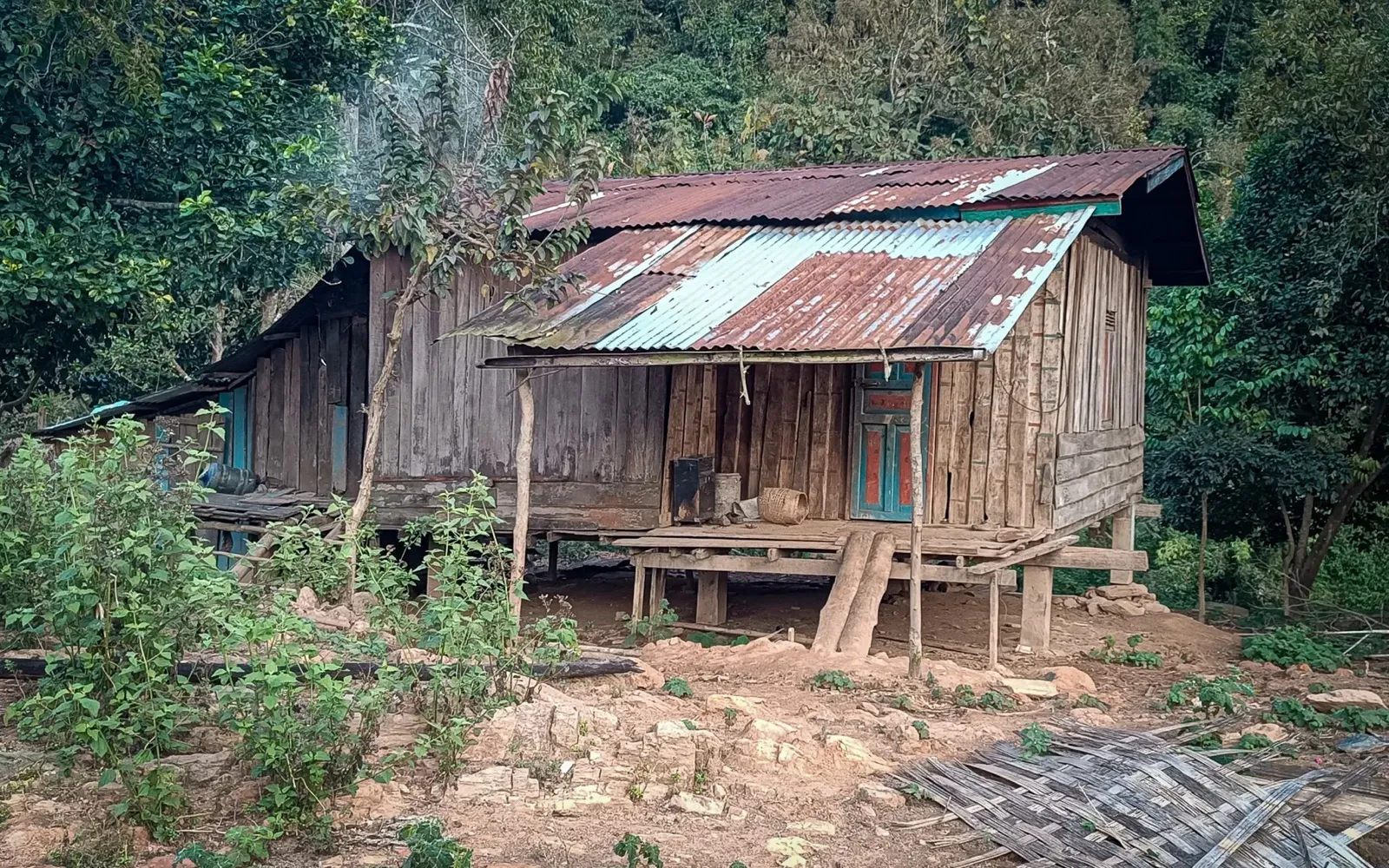
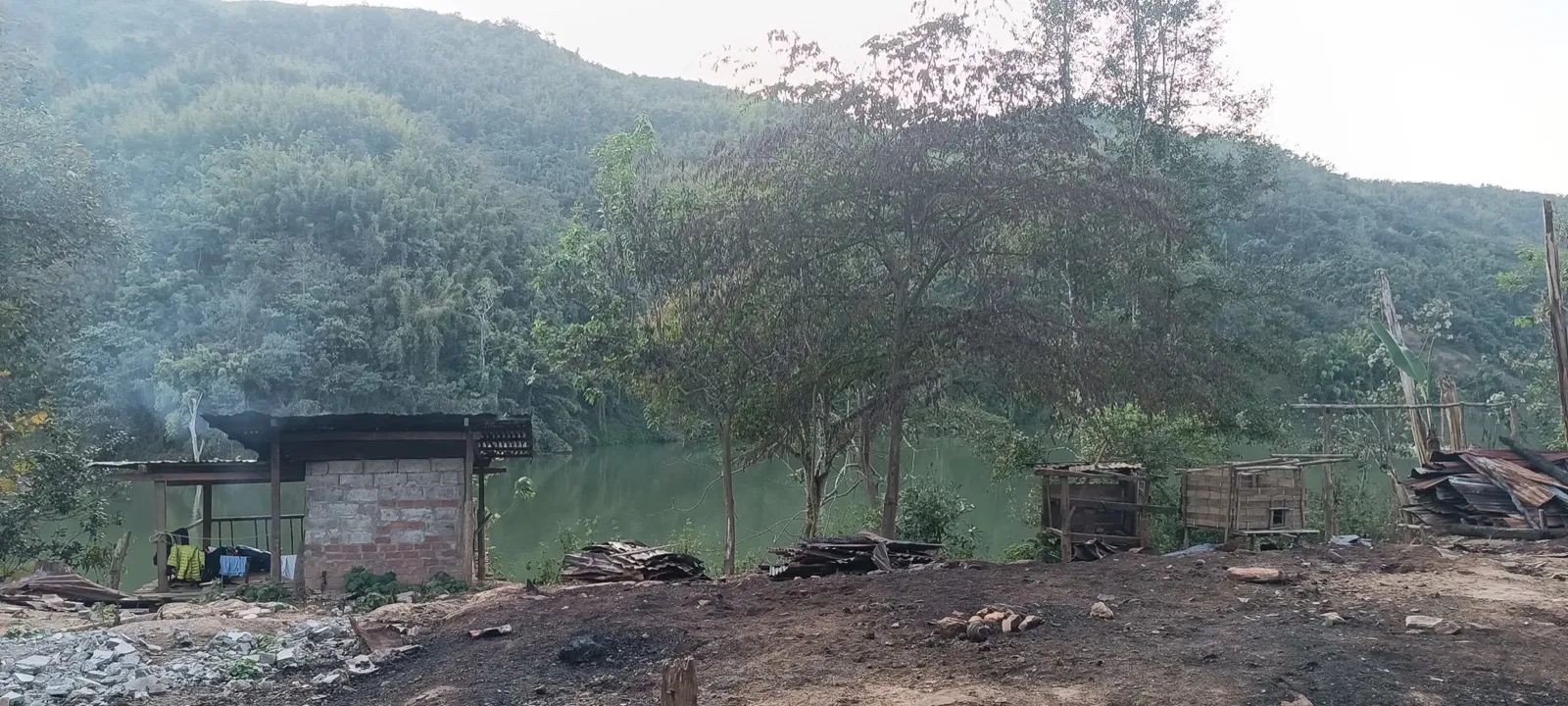
We arrived at a settlement with no people. Just oxen and cattle grazing between empty buildings. It felt like it used to be a village — the structures were still standing, wooden doors with Lao script, stilt houses with tin roofs — but everyone had left. Whether the dams displaced them or something else moved them on, we didn’t know. The silence was the loudest thing we’d heard in two days.
We set up camp in an open shelter. Built a campfire in a brick oven that someone else had used before us. Hung our clothes to dry. Laid out sleeping rolls on the concrete floor. The river was right there, visible through the gaps in the roof.
The Floor, the Fire, the Shots
A couple of fishing people came by after their boat broke down. They warmed up at our fire, ate, and set off again into the dark. In the distance, we could hear bullet shots — hunters, probably, though we never found out. The campfire cracked. The river moved. The oxen did whatever oxen do at night.
It was one of those nights where you’re very far from anything familiar — sleeping under open sky in a place that time left behind. No wifi, no electricity, no other humans for kilometres. And it was perfect.